Understanding the Challenges of Breastfeeding Employees
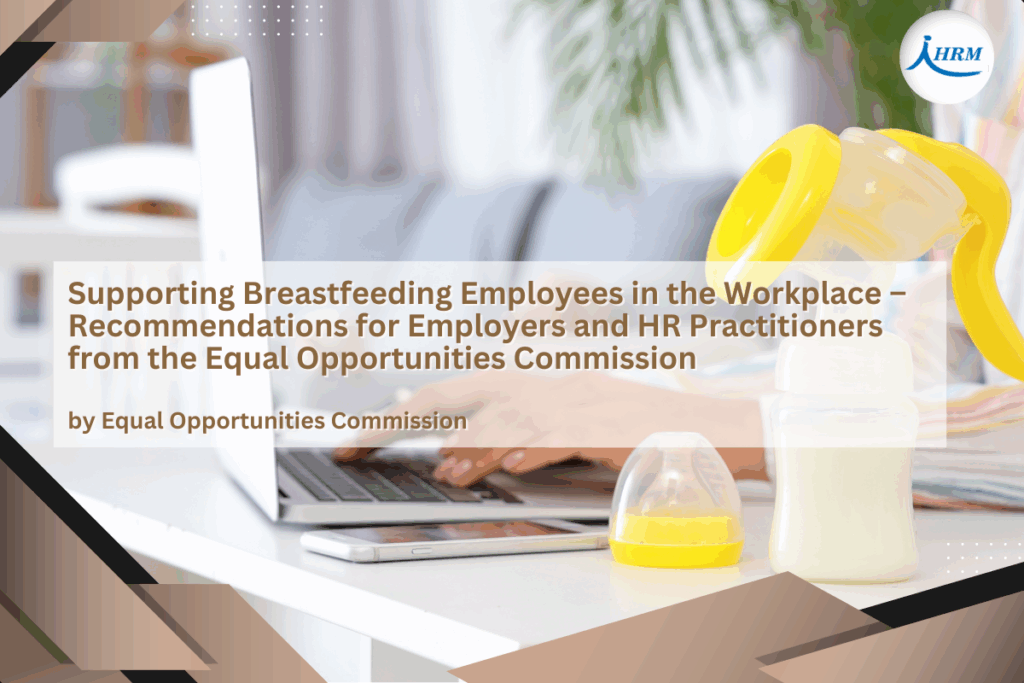
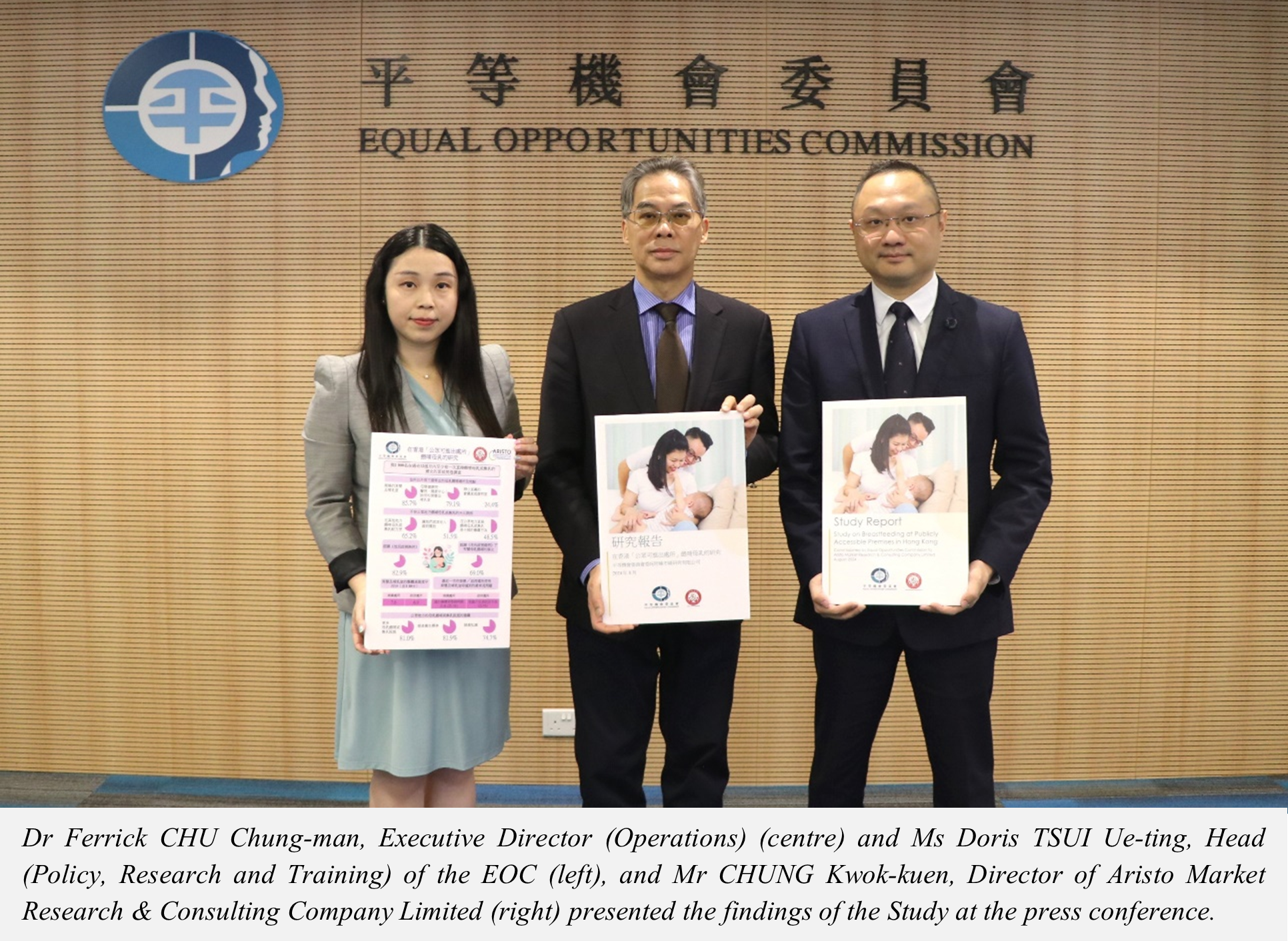
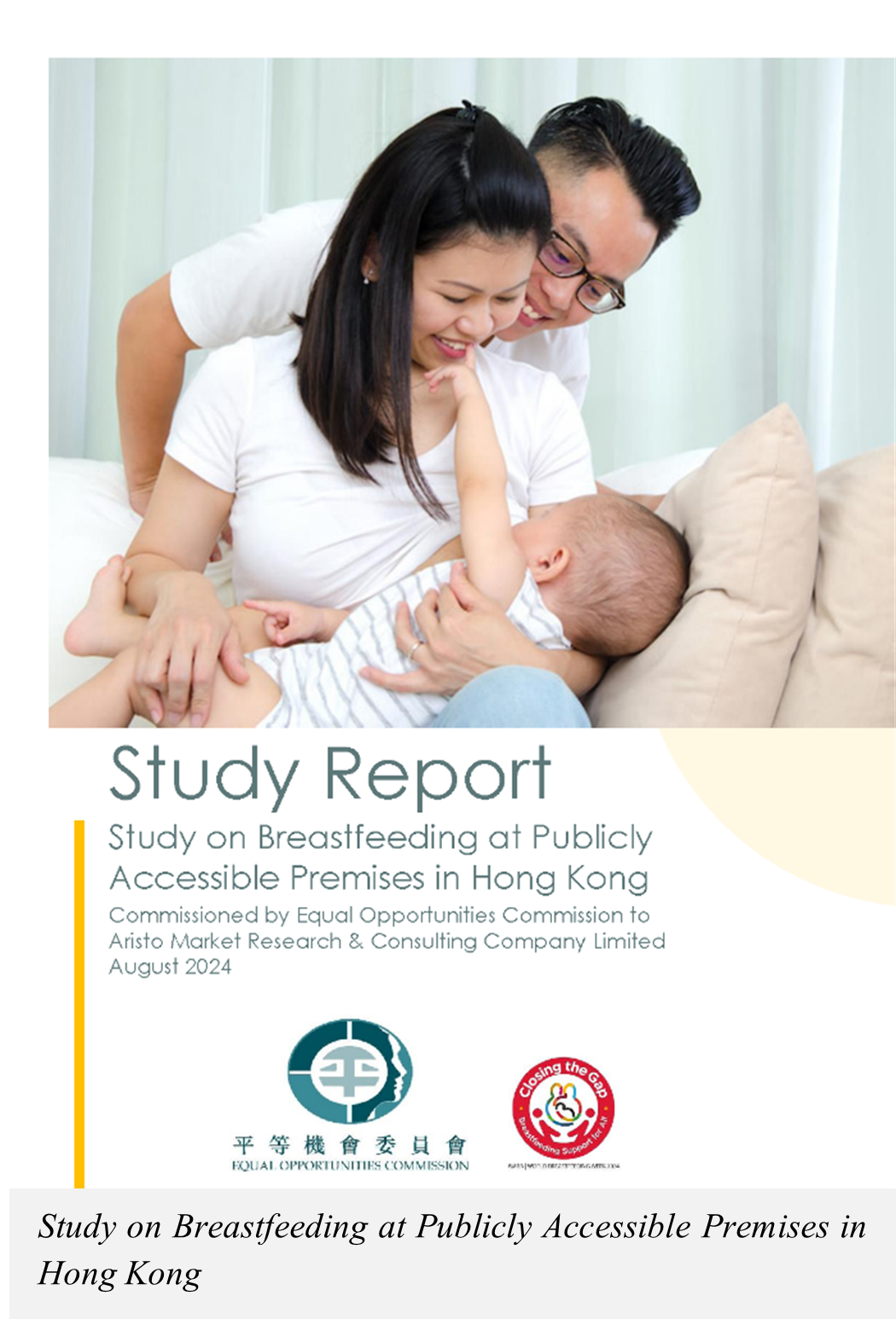
The EOC has recently released the “Study on Breastfeeding at Publicly Accessible Premises in Hong Kong” 1(“the Study”), which sheds light on the experiences and obstacles faced by breastfeeding women in the workplace. It offers valuable insights for organisations to create a more supportive environment for their employees.
Unveiling Insights for Employers and HR Practitioners
The research team had conducted interview surveys with 1,000 breastfeeding women, who had directly breastfed or expressed milk in the past 12 months; and focus group discussions with 30 breastfeeding women. The Study has unveiled several crucial findings that are relevant to employers and HR practitioners.
- Insufficient Support from Colleagues – 11.5% of the interview respondents indicated that their colleagues provided less support during their breastfeeding journey.
- Breastfeeding Locations Apart from Residence – 24.4% of the interview respondents chose to breastfeed or express milk in meeting rooms or storage rooms in offices, which was less popular than shopping malls’ babycare and lactation rooms (“BLRs”) (85.7%) and BLRs at healthcare facilities (79.1%).
- Dilemma of Breastfeeding – While 49.8% of the interview respondents who were at work breastfed or expressed milk at office premises during working hours after resuming work, unfortunately, 22.1% of them chose not to do so during working hours.
- Breastfeeding Locations during Working Hours – 86.3% of the interview respondents who had a usual location to breastfeed or express milk during working hours after resuming work did so in meeting rooms or storage rooms in office premises.

- Lack of Designated Breastfeeding Spaces – Companies rarely designate spaces for expressing milk, hence, working mothers utilise restrooms, partially enclosed areas, or distant breastfeeding rooms.
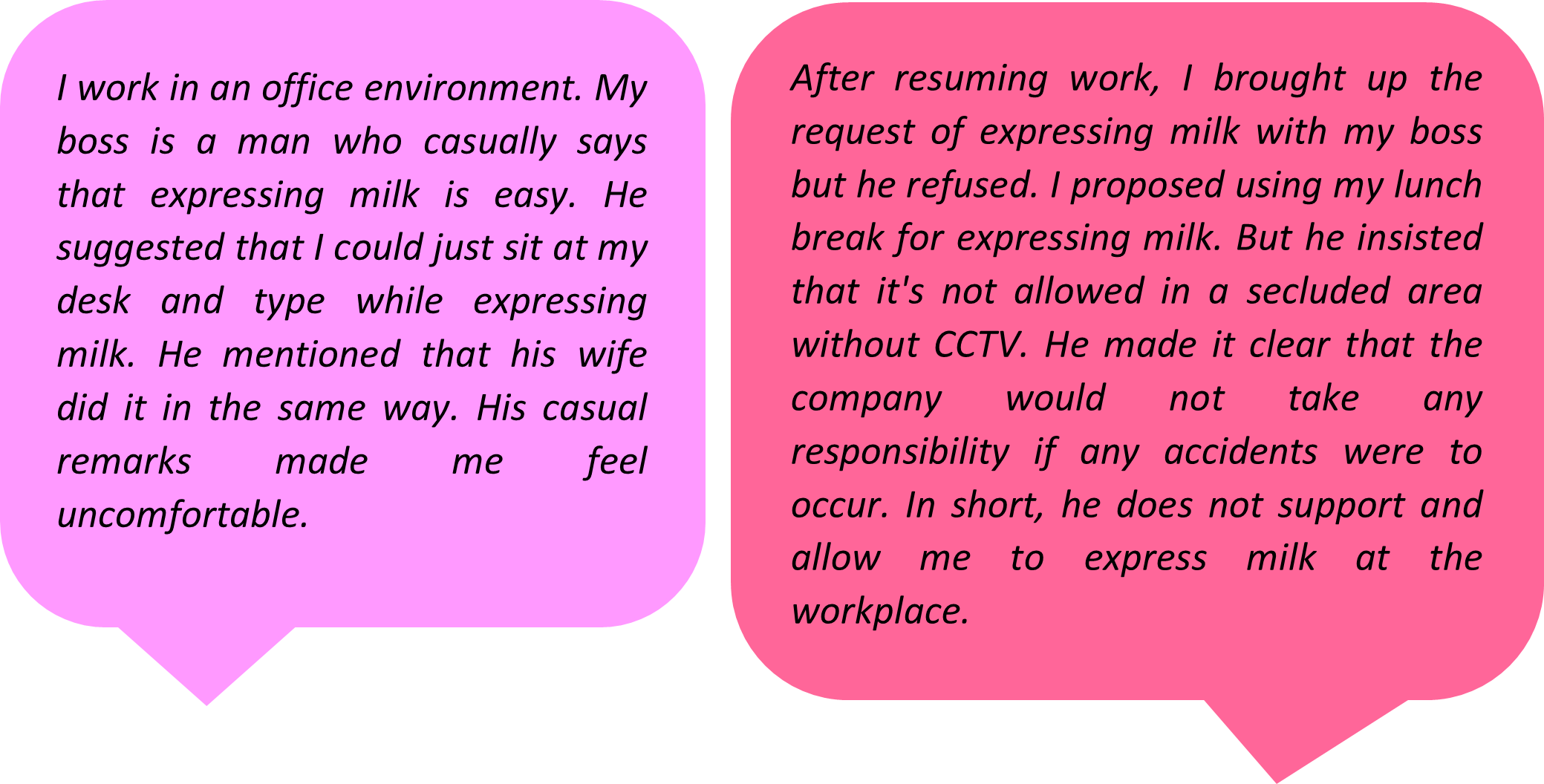
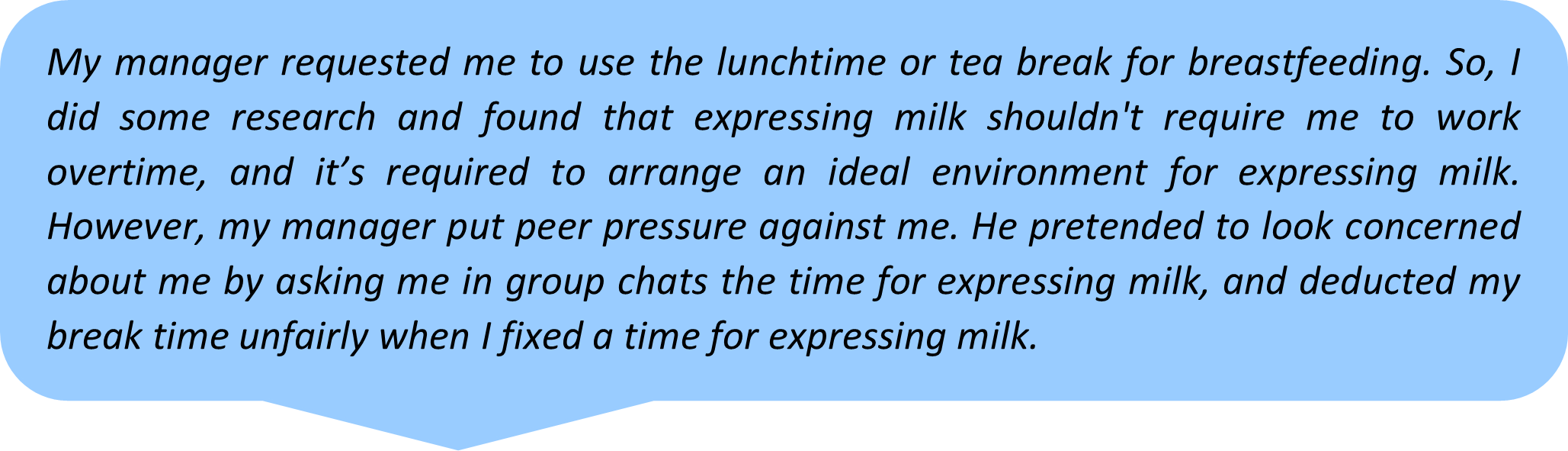
- Supervisory and Societal Pressures – Some supervisors required breastfeeding mothers to use lunch breaks for expressing milk. Misunderstanding and lack of empathy towards breastfeeding needs were common, with societal pressures sometimes forcing mothers to quit breastfeeding.
Recommendations for Creating Positive Changes
To create a more supportive environment for breastfeeding employees, employers and HR practitioners are encouraged to implement the following measures:
- Flexible Policies – Employers are encouraged to proactively adopt flexible policies that allow breastfeeding or expressing milk during working hours. Employers should follow the guide and booklet developed by the Department of Health and the EOC to establish a breastfeeding-friendly workplace and integrate these policies into company protocols.
- Awareness Training – Employers are advised to conduct comprehensive awareness training sessions among employees to emphasise the importance of accommodating breastfeeding mothers in the workplace and foster a supportive environment.
- Designated Spaces – Employers can designate private and comfortable spaces for expressing milk. These spaces should be well-ventilated and furnished with necessary amenities such as a chair, a table and a small refrigerator.
Adoption of Universal Design in the BLRs at Workplace
The access audit results revealed that only 31.7% of the doors of the babycare areas and 42.3% of the doors of the lactation areas in shopping centres and government premises had universal design (“UD”). This finding indicates that UD has not been widely adopted in BLRs yet. Therefore, employers are encouraged to incorporate UD features, such as automatic doors with sensors or large button switches, for the doors of BLRs or designated rooms for expressing milk in offices.
If your organisation has already adopted UD-compliant doors, or is planning to support people with diverse needs with certain facilities or equipment, you are welcome to join the Universal Accessibility Pledge initiated by the EOC. By taking this pledge, organisations can showcase their dedication to creating an accessible environment for all employees. Please visit the link for more details: https://www.eoc.org.hk/en/udas/application/UA-pledge. The submission deadline is 30 August 2024.
Joining Hands to Support Breastfeeding Employees
Breastfeeding in the workplace is more than a personal choice — it is a fundamental right of every mother. By implementing supportive policies and raising awareness, organisations can enhance employee morale, demonstrate their commitment to employee well-being, and attract and retain top talent. Let’s work together to create a breastfeeding-friendly workplace where every employee feels supported and valued to balance their work and caring responsibilities effectively.
Please visit the link below for more details on the findings and recommendations of the Study: https://www.eoc.org.hk/en/policy-advocacy-and-research/research-reports/2024-1.
__________________________________________________________________
1https://www.eoc.org.hk/en/policy-advocacy-and-research/research-reports/2024-1
2If companies wish to further understand how the Sex Discrimination Ordinance provides protection against discrimination and harassment of breastfeeding women, and how to establish a breastfeeding-friendly workplace, please refer to the guidelines and pamphlets published by the EOC via the following link: https://www.eoc.org.hk/en/discrimination-laws/sex-discrimination-laws.