Catering for Workplace Health and Safety Requirements – Employers’ Duties [ENG] By Samantha Cornelius, Linklaters, Counsel, Head of Employment & Incentives – Hong Kong;Joshua Li, Linklaters, Managing Associate, Employment & Incentives – Hong Kong
Key takeaways:
A recent case in the District Court (the Court) held it was necessary for the defendant to provide a reasonably safe system of work following a workplace injury sustained by the plaintiff.
The Court upheld the plaintiff’s claims while acknowledging she might not be entirely accurate with the details of the accident.
Facts
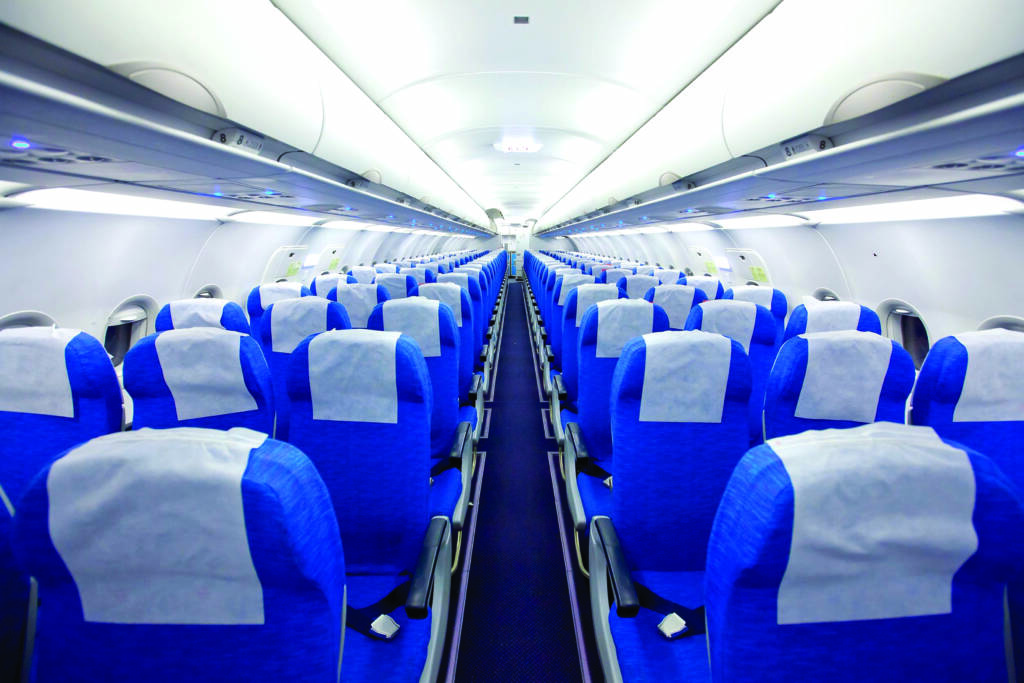
The plaintiff in this case was employed as a production attendant by the defendant, which specialises in the preparation and provision of food and meals for aircraft flights. Her general job duties involved collecting trays of cooked food from trolleys in refrigerated cold rooms and bringing them to her working area, where she would arrange the food serving as part of a flight meal, before transporting it to the next workstation for further processing.
It was common practice that the plaintiff had to work 11 to 12 hours per day on average. Since late 2012 and on the particular day that the accident occurred, the plaintiff had been instructed to prepare food for first-class passengers. The accident in question occurred in August 2013, which the Court held to be high season for the aviation industry with a particularly heavy workload in the kitchen and high pressure on the plaintiff, who also happened to be working alone at the time of the accident.
From the plaintiff’s account of events, she was locating a particular food tray from a cold room which was packed full of food trolleys. As the cold room was too full, she was unable to move the food trolleys to make sufficient space to retrieve the food tray. She therefore placed herself into a tight space between food trolleys and tried to pull and squeeze the food tray, with an estimated weight of about 136 to 180 kilos, through a tight gap on the side of the trolley where the food tray had been placed. While doing so, she sprained her lower back and right shoulder. The plaintiff was able to endure the pain and continued working for the rest of that day, but she subsequently had multiple treatments from clinics and hospitals as the pain persisted.
The defendant, on the other hand, heavily criticised the quality of the plaintiff’s evidence and submitted that she was an unreliable witness, and that she had been exaggerating and even lying about the accident. In any event, the defendant alleged that (i) it had provided, and the plaintiff had received, a training session regarding the correct procedures and posture for the performance of her work, and therefore the plaintiff would not have injured herself had she followed the correct procedures; (ii) the cold room was in any event spacious enough for the plaintiff to follow proper procedures; and (iii) the plaintiff was contributorily negligent.
As an agreed diagnosis under a joint expert report, the plaintiff suffered from soft tissue injuries to the neck and lower back which were consistent with the mechanism of injury described by her. It was also common opinion in the joint psychiatric report that the plaintiff suffered from Adjustment Disorder with Mixed Anxiety and Depressed Mood. However, the plaintiff had reached maximal medical improvement at the time of the joint examinations, and therefore she should only have mild/moderate residual pain and residual psychiatric symptoms. The plaintiff should be physically and mentally capable of returning to her pre-accident employment.
Decision
While the Court accepted that the plaintiff had a tendency to exaggerate matters and that she might not be entirely accurate with the details of the accident, the Court found that the plaintiff was generally reliable. The Court also highlighted the fact that, other than attacking the discrepancies in the plaintiff’s evidence (which the court considered as immaterial given the overall impression that the plaintiff was an unarticulated person), the defendant did not offer much evidence to contradict the plaintiff’s version of events.
In terms of the defences, the Court held that it was foreseeable by the defendant that the plaintiff would work long extra hours and under time pressure. The defendant was required to provide a reasonably safe system of work having such foreseeable circumstances in mind. Despite the fact that the plaintiff had received training for her work, the court placed particular focus on the evidence about the workload in the month of August: the fact that it was unrealistic to seek additional help under time pressure and the fact that the plaintiff had to work long hours without any facilities to rest. As such, the Court held that the system of work, which had allowed the plaintiff to work alone while following the defendant’s procedures, was unreasonable and unsafe, and that the plaintiff had not been contributorily negligent. The Court therefore upheld the plaintiff’s claims.
Having assessed the relevant medical evidence and evidence on quantum submitted by the plaintiff, and considering that the plaintiff had already obtained employees’ compensation in the sum of HK$280,000, the Court assessed damages in the total sum of HK$343,402, consisting of damages for pain, suffering and loss of amenities, pre-trial loss of income, a small amount for future medical expenses and special damages for medical expenses already incurred, travelling expenses and food.
Takeaway points for HR professionals
Employers owe employees an obligation to ensure their health and safety at work. Such duties may arise under statutes (for example, the Occupational Health and Safety Ordinance and the Employees’ Compensation Ordinance) or under common law. Employers owe their employees a duty of care to take positive action, as far as is reasonably practicable, to provide, among other things, a safe place to work, including access and movement around the workplace.
As this case illustrates, even though generic training and general workplace safety procedures had been put in place, they were not in themselves sufficient to avoid liabilities in the case of a workplace accident. Courts are entitled to look into the overall working conditions and other relevant circumstances of a particular employee in assessing whether an employer has fulfilled its duty of care towards its employees.
Given variations in jobs and industries, it would be difficult to prescribe what constitutes sufficient measures in terms of safety at work in every situation. That said, there are some practical measures that employers may consider:
Conducting risk assessments at particular workstations – it is advisable for employers to conduct these assessments at regular time intervals and at different times of the day or year in order to ensure that reasonably foreseeable circumstances, for example, peak seasons, have been catered for;
Setting up appropriate communication channels among colleagues for sharing any recommended practices and procedures – this will ensure that back office colleagues will receive appropriate updates on working conditions faced by frontline staff, and that all employees are reasonably clear as to what is expected of them;
Maintaining appropriate records of all workplace safety measures that have been put in place – as illustrated by this case, the courts may undertake a microscopic assessment of all relevant evidence;
Establishing an internal response strategy to address incidents and emergencies in the case of an actual or suspected workplace accident; and
Ensuring valid employees’ compensation insurance policies are in place.
Note: The information contained herein is intended to be a general guide only and is not intended to provide legal advice. This journal, its publisher and the HKIHRM do not assume any legal responsibility in respect of any comments provided in this article, which do not constitute legal advice and should not be taken or construed as such. Independent professional legal advice should be sought as necessary in respect of legal matters and issues raised in this article.