The HKIHRM’s 2021 Pay Trend Survey Findings Reflect Optimism Mixed with Caution By Chris Davis
Key takeaways:
As COVID-19 headwinds continue to blunt Hong Kong’s economic recovery, employees are expected to receive a modest salary increase in 2022, according to the HKIHRM’s 2021 Pay Trend Survey.
With change as a constant factor, organisations can ensure they are future ready by reinvigorating their workforce through reskilling and upskilling strategies.
With the COVID-19 health crisis continuously disrupting the economy, employee salary increases are forecasted to make a modest comeback in 2022.
Conducted between January and September in 2021, the Pay Trend Survey findings from the Hong Kong Institute of Human Resource Management (HKIHRM) were based on data provided by 115 companies from 16 different business sectors, involving about 168,000 full-time salaried employees. The annual survey records the trends for pay adjustment, bonus incentives, and employee benefits. In 2021, according to the survey findings, Hong Kong employees received an average salary increment of 1%, a 0.4% drop from the previous year. After factoring in the Consumer Price Index which averaged 1.4% from January to August 2021, the real base pay adjustment was -0.4%, the first time the pay adjustment has dipped below 0% in a decade.
Based on the survey findings, of the 105 responding companies which answered the question on 2022 salary increases, more than half (57%) reported that they had yet to conduct a pay adjustment projection for 2022. Among those organisations which provided data on base pay adjustment projection for January to April 2022, the projected pay adjustment is 3%. Only 6% of the companies that responded stated that a pay freeze is likely to be implemented.
Base pay adjustment in 2021
In 2021, of the 105 companies which answered the question about salary adjustments, 68.6% offered a pay increase, 30.5% implemented a pay freeze, while 1% administered a pay decrease. Of the employees covered, 65.7% experienced a pay freeze while 34.3% was provided with a pay increase in 2021.
In 2021, medium-sized organisations employing 500 to 1000 employees provided the biggest pay rise at 2.8%. Small companies employing fewer than 500 employees provided a pay rise at 1.4%, while companies employing more than 1,000 staff offered the smallest pay increase at 0.7%. In terms of pay adjustment according to employee level, senior level staff received the biggest pay adjustment at 1.5% while general level staff lagged behind at 0.9%. Same as 2019 and 2020, company performance was the main factor for determining pay adjustment. Mirroring employers’ ongoing concerns about COVID-19’s impact on the business landscape, Hong Kong’s economic conditions moved up one place to take the number two spot for determining pay adjustment. Individual performance dropped one place to take the number three spot.
Guaranteed and non-guaranteed bonus
Among the organisations which provided data on bonus payments in 2021, 37.4% reported that they had a guaranteed bonus scheme in place during the survey period. The average size of guaranteed bonus remained at 1.01 months of base pay; a figure that had remained unchanged since 2017. Meanwhile, 91.3% of the companies that provided data reported they had a non-guaranteed bonus payment scheme in place during the survey period. Among all the surveyed employees, 75.0% were eligible for a non-guaranteed bonus plan. For eligible staff awarded this incentive, the average size of a non-guaranteed bonus was 1.59 months of base pay. In terms of the size of non-guaranteed bonus payments at employee level, top level staff were rewarded with 6.40 months of base pay. Senior, middle, and general level staff received 2.64, 1.77, and 1.21 months of base pay respectively.
New workforce expectations
Commenting on the pay trend survey findings, Lawrence Hung, Vice President, HKIHRM, noted the 1% weighted average pay adjustment for 2021 delivered few surprises. “While some industry sectors performed better than others, employers generally took a cautious approach to salary adjustments,” Hung said. He added that business executives tend to base salary decisions on their knowledge and understanding of their own industry sectors. Looking ahead, Hung said while the 3% pay adjustment forecast for 2022 is an indication that business sentiment is improving, recovery across different sectors is likely to remain uneven.
Hung also noted that as organisations reposition their business models to adapt to the new normal; they face challenges that could have an impact on their talent management strategies. For instance, employees are evaluating how and where they want to work and what they want for their careers. Furthermore, an emigration wave is exerting pressure on talent retention and the talent acquisition market.
While the HR function is often juggling with limited resources, Hung stressed that in light of current trends, it is important that HR teams support their organisations by focusing on how the prevailing uncertainties could impact upon talent management strategies. For example, companies need to do more to create a compelling employer brand by motivating employees with reskilling and upskilling opportunities and a greater focus on wellbeing initiatives. He said changes to work and work practices have made taking care of employee wellbeing crucial. “Employee wellbeing is no longer a perk, but a ‘must’,” he said. Although many organisations already offer wellbeing support, it is incumbent upon the HR function to boost their visibility through increased communications, and, when necessary, expand certain offerings to ensure both employees and line managers have access to the resources they need.
Make culture a priority
Observing similar trends, Senna Cheung, Co-chairperson, Remuneration Committee, HKIHRM, added while employers are cautiously optimistic about an economic bounce back, evolving business models, a shift to hybrid working and technology transformation have created a skills imbalance across sectors. “There is intense competition for talent with digital skills,” Cheung said. The war on talent with in-demand digital skills is not only confined to the Hong Kong recruitment environment, regional and global employers are also tapping into the city’s talent pool.
While prioritising employee skills development has been common practice in recent years, Cheung said COVID-19 had reinforced this trend. “Across many sectors the pandemic has accelerated digitisation and technology transformation,” she said. The new reality requires HR teams to support their management teams with information and guidance on developing effective communication, performance management tools, team and relationship building initiatives, and collaboration among hybrid teams.
As organisations navigate a VUCA period, Cheung stressed the need for HR professionals to monitor changing work trends to understand the impact of new policies. “HR teams need to be more sensitive to changes than previously, especially in matters relating to company culture,” she said. Led by the HR function, through its many touchpoints with employees, HR teams can help their organisations ensure they are investing in strategies that support an agile, flexible, and resilient workforce. The objective, Cheung said, is to help employees develop a mindset that keeps them engaged with their work and prepares them in adapting to evolving business demands.
Energise the employee experience
With remote and hybrid modes of work here to stay, Cheung and Hung concurred that employees expect not only a better designed employee experience but also new models of delivery. This means gaining a deep understanding of what employees want and expect and identifying pain points. Describing employee feedback mechanisms as “building blocks”, Hung believes that creating a positive employee experience cuts across organisational silos and conjures a greater sense of brand loyalty in the workforce.
When it comes to crafting employee experiences, Cheung advised HR teams to do so in a similar way to how marketing and product teams focus on the customer experience. For example, using different types of communication channels to acknowledge how employees’ contributions are valued and celebrate successes.
While a proliferation of digital tools has emerged to help HR teams design and deliver employee experiences, both Cheung and Hung advocate regular one-on-one communication with workforces. In other words, to create meaningful employee experience and workforce super teams, HR practitioners need to design experiences that bring people and technology together in a more human-centric way.
The way forward for C&B
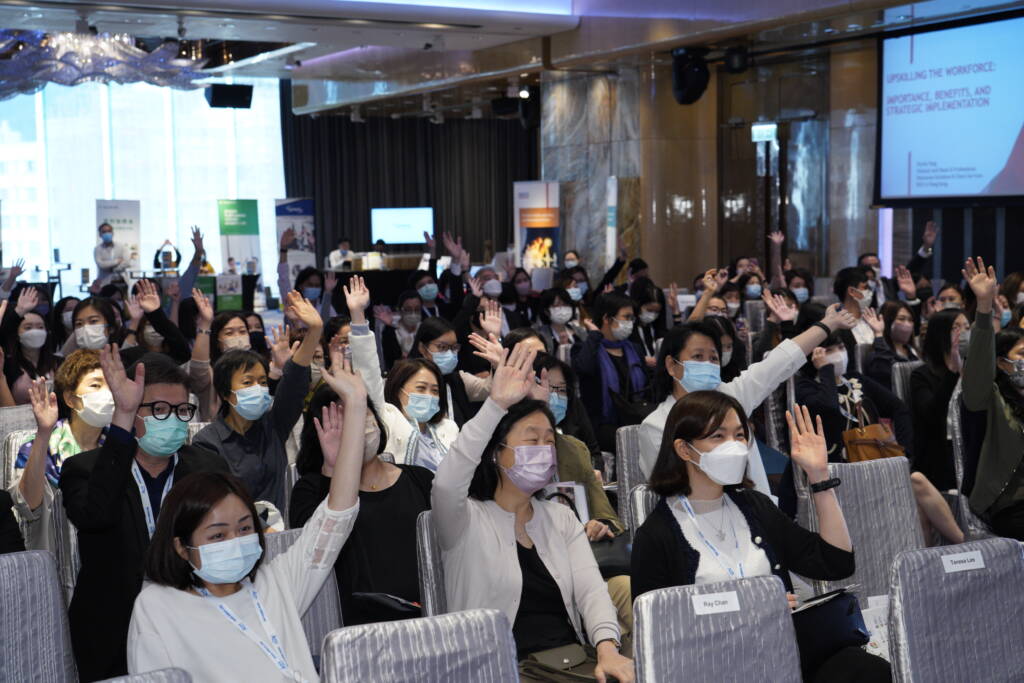
Entitled “Decoding the Future of C&B in a Post-COVID World”, the Pay Trend & Benefits (PTB) Seminar 2021 featured a range of prominent speakers renowned for their expertise and insights relevant to the HR profession. Offering an in-depth perspective of Hong Kong’s economic trends and outlook, George Leung, Chief Executive Officer, Hong Kong General Chamber of Commerce, outlined the prevailing drivers and influences, including inflation, wages, and COVID-19, that are likely to shape the city’s short- and longer-term economic growth. Staying with the theme of the factors influencing the business climate, Senna Cheung presented the highlights of the Pay Trend Survey results.
Dubbed a “good boss” by the media, in his presentation, Ray Chan, CEO and Co-founder, 9GAG, explained why he disagrees with the assessment and fleshed out the rationale behind his approach to being an industry leader. With many employees believing that they are not fairly compensated and that performing well won’t necessarily result in better pay, Brian Sy, Principal Career Consulting Hong Kong, Mercer, delved into why the rewards experience is prime for reinvention.
Mapping out how the HR function can enhance their organisations’ environmental, social, and governance (ESG) performance, Gabriel Kung, Chief Commercial Officer, Bowtie Life Insurance Company Limited, and Philbert Tong, Assistant Head of Products & Technology, ESG Matters, offered tips and insights on how an ESG-friendly approach could benefit employee wellbeing and simultaneously reduce costs. Cheng Yan-chee, Acting Managing Director and Executive Director, Mandatory Provident Fund Schemes Authority (MPFA), updated participants on how the MPFA eMPF platform could provide benefits to employers, HR practitioners, and employees alike.
Andy Luk, Executive Council Member, HKIHRM, provided the highlights of the 2021 Topical Study: Emerging from the COVID-19 Crisis: HR Practices & Policies 2021. Additional highlights of the seminar include a presentation by Portia Tang, Director, Head of Professional Resources Solutions & Client Services, BDO, who outlined the importance of reskilling and upskilling the workforce as a company strategy to gain long term benefits and stay competitive. Delivering his presentation by webcast, Stephen Tong, Client Portfolio Manager, Franklin Templeton Investment Solutions Team, provided reasons on why ESG investing, a growing trend, is more than simply investing in companies with good ESG.
Click here to subscribe the 2021 Pay Trend and Pay Level Survey Report.