Skip to content Skip to footer

Hong Kong’s ranking among the world’s most liveable cities recovers but remains significantly lower than ten years ago
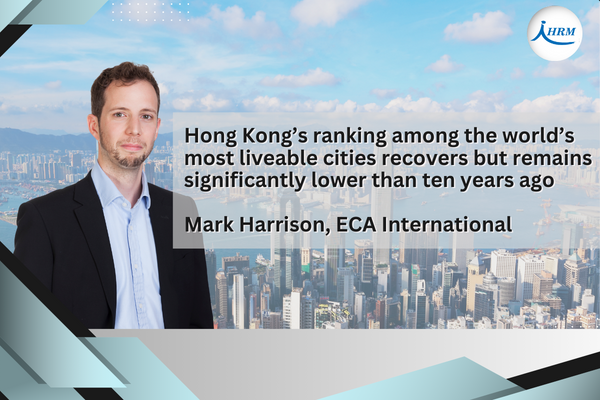
Hong Kong’s ranking among the world’s most liveable cities recovers but remains significantly lower than ten years ago

Key Takeaways:


  • The removal of pandemic restrictions in 2023 has improved the liveability of Hong Kong over last 12 months.
  • Hong Kong’s overall ranking has fallen in the last ten years due to concerns over socio-political tensions and freedom of expression.
  • World class infrastructure and low crime rates ensure it remains in the top 10 most liveable Asian cities.
  • Singapore remains the most liveable city for Asian expatriates, with low crime rates among the attractions.

Hong Kong has long been a key global city and expatriates have been attracted by the career opportunities associated with its status as a well-connected global financial and business hub. The high salaries on offer and low tax environment also go some way to make up for the high cost of living and housing in the city. However, over the last few years the number of expatriates in the city has fallen in response to both political tensions and the city’s response to the Covid pandemic.


At ECA our annual Location Ratings assessments aim to provide an objective assessment of living conditions in over 500 locations globally. We assess factors associated with day-to-day lifestyle conditions, including quality and availability of health services, housing and utilities; access to a social network and recreational and leisure facilities; transportation infrastructure; climate; personal safety; socio-political tensions; and air quality. These assessments are used by organisations to determine if they need to provide additional allowances to incentivise employees to relocate to any of the cities we research.


Based on these assessments, liveability in Hong Kong improved last year in comparison to 2022 due to the removal of the final Covid 19-related social distancing restrictions. Hong Kong and mainland China were among the last places globally to lift restrictions, meaning they were relatively more challenging locations to live in during the final stages of the pandemic compared to locations which lifted restrictions earlier. With those restrictions belatedly lifted, both Hong Kong and mainland Chinese locations have seen improvements in our rankings over the last 12 months.


Looking at the changes over the last ten years, however, Hong Kong’s ranking in terms of liveability has fallen. A location’s liveability relative to others will depend on where employees are assigned from. For the purpose of this article, we have assumed that an employee will be relocated to Hong Kong by their employer from any other location in the east Asia region (including mainland China, Japan, Malaysia or Singapore). Our assessments show that Hong Kong’s position in our ranking has fallen from 17th globally in 2013 to 77th now. Since political demonstrations in 2014 and protests in 2019, elements of our assessment related to socio-political tensions and freedom of expression have worsened. However, Hong Kong still has excellent facilities, infrastructure, recreational options and low crime rates and remains an attractive location relative to many others in the region. Indeed, Hong Kong is behind only Singapore, Japan and Busan in Korea Republic among Asian locations in our assessment. The intrinsic risk of disruption caused by typhoons, relatively high levels of pollution and difficulties in obtaining suitable accommodation are other factors which count against Hong Kong compared to locations such as Singapore, which remains the most liveable city in Asia.


To remain an attractive option for people relocating for work, a focus on continual small improvements has been the most successful plan among those locations we have seen rise the most in liveability rankings over the last ten years. In Hong Kong, air pollution is an issue the local government could improve if it wished to become more attractive; we have seen efforts by municipal authorities in Beijing, for example, lead to better air quality. Ensuring that English remains widely spoken, along with Cantonese and Mandarin, would also ensure Hong Kong kept its place as a ‘global city’. Enabling ongoing diversification of the expatriate workforce would help Hong Kong remain vibrant and globally relevant. Those hoping for an easing of socio-political tensions and better relations between China and the United States may be disappointed, however, at least in the short term.


Beyond Hong Kong, cities in mainland China have climbed significantly in the rankings in the last ten years, despite losing some of this momentum during the Covid-19 pandemic. The zero-Covid policy and associated restrictions caused many Chinese cities to fall in our rankings for a couple of years, but when we look at our current assessment compared to five or ten years ago, we can see that Chinese cities have risen notably in the rankings as living conditions have generally improved. Some aspects of life continue to be challenging for employees relocating to Chinese cities for work, such as high levels of pollution, censorship, and suboptimal healthcare facilities. However, improvements in areas such as transport infrastructure and international schooling provision are the reason cities like Shenzhen (137th this year compared to 152nd ten years ago), Xi’an (163rd this year compared to 176th), and Wuhan (up from 160th to 145th) have improved in the rankings and have narrowed the gap in living conditions between cities in mainland China and Hong Kong.


The pattern of gradual improvement has also been witnessed elsewhere in Asia. Small developments over the last ten years in areas such as transport infrastructure, health services and recreational facilities have seen the likes of Jakarta (213th to 196th), Phnom Penh (200th to 184th) and Hanoi (160th to 144th) climb the rankings. Busan is the most dramatic example, having risen from 81st to 49th over the last decade due to small but significant improvements in healthcare facilities, recreational options, and the quality of utilities.


Hong Kong remains one of the most liveable locations in Asia, but our annual assessments show it should not be complacent. Although its ranking improved in the past year, owing to the removal of Covid-19 restrictions, it has fallen over the longer term. Without making the necessary ongoing changes to keep attracting the world’s top talent, Hong Kong may struggle to maintain its current, still lofty, status over the longer term.

?
Join as member
to enjoy exclusive discount

條款和條件

  1. 會籍有效期由4月1日至3月31日(會員可選擇一年或兩年,而「專業途徑為基礎」的資深會員、專業會員、副會員需符合 持續專業發展(CPD)的要求。)
  2. 本會可隨時調整入會費及會員年費,而無需事先通知。
  3. 本會每年3月以郵寄及電郵形式通知會員續會,會員收到發票後,可按照付款方式繳交續會年費。於早鳥優惠期間成功繳交續會年費可享早鳥優惠價,及本年度續會之會員可獲得相應金額的電子代用券。
  4. 升級之會籍有效期由4月1日至3月31日,並按照會員所選之續會年期計算 (一年或兩年)。
  5. 會員持有有效的會籍及符合會籍升級之條件,可申請會籍升級。有關申請安排可與會員服務部聯絡。
  6. 年滿60歲且已退休的會員可電郵本會申報。會員年費可獲半價優惠。
  7. 會員可選擇重新續回自2010年4月1日新會籍制度後終止的會籍,並有機會:
    。 繳付復原費用及於會籍終止其間所欠交的會員年費;及
    。 提供有關會籍終止期間內已符合續專業發展 (CPD) 要求的紀錄(如適用)。
  8. 本會保留酌情處理的權利,並就每項申請擁有最終決定權。有關費用不可取消且不可退還。


如果您對會籍有任何疑問,歡迎致電會員服務部 (2837 3814 / 2837 3813) 
發送電子郵件至  membership@hkihrm.org

世界大型企業聯合會(TCB)亞洲理事會會籍

會員專享優惠 –世界大型企業聯合會(TCB)亞洲理事會會籍

作為香港人力資源管理學會(HKIHRM)的資深會員或專業會員,您可享高達20%的折扣,加入世界大型企業聯合會(TCB)的亞洲理事會會籍,獲取前瞻性見解。

世界大型企業聯合會(TCB)亞洲理事會會籍為您提供同行網絡、思想領導力資源以及專家支援,協助您應對工作挑戰,提升團隊及組織績效。透過匯聚全球領先企業的高級管理人員,理事會將引領您參與深度且以解決方案為導向的對話。

亞洲理事會會籍包括:

  • 每年兩至三次的實體會議
  • 專屬理事會網站
  • 理事會基準調查及專屬團隊支援

申請資格:

  • 有效的學會資深會員或專業會員會籍
  • 以個人名義申請
  • 申請需經TCB審核及批准

首年會籍折扣優惠

  • 1年會籍: 美金 9,000 (美金 7,200)

申請及查詢:
Brendan Moran先生
電郵:Brendan.moran@conference-board.org;電話:+65 6645 4696

與海外會籍及資格相互認可之安排

香港人力資源管理學會(HKIHRM)與加拿大卑詩省的The Chartered Professionals in Human Resources of British Columbia and YukonCPHR BC & Yukon)已達成專業會員會籍相互承認的安排

學會的資深會員F.I.H.R.M.(HK) 及專業會員M.I.H.R.M.(HK)均可成為加拿大CPHR BC & Yukon’s Chartered Professional in Human Resources Designation (CPHRTM) 的專業會員。此共識是基於雙方有關會籍之專業性及認受性達致相同水平而作出的互相承認。

  • 如欲成為香港人力資源管理學會之專業會員M.I.H.R.M.(HK),請按此了解更多;申請表格請按此(只有英文版本)。
  • 如欲成為加拿大CPHR BC & Yukon之CPHRTM專業會員,請 按此了解更多;申請表格請按此(只有英文版本)。

查詢:

香港人力資源管理學會:+(852) 2837 3814,membership@hkihrm.org 

CPHR BC & Yukon:請將您的申請直接電郵至  cphr@cphrbc.cahttps://cphrbc.ca/cphr/i-am-a-cphr/cphr-mutual-recognition/

    Pesonal Information

    Training Information

    Need assistance? Interested in joining us? Or just have a question?

    We’re here to help! Reach out via message, and our team will respond as quickly as possible.

        Asia Council Membership

        HKIHRM Members’ Privilege – Asia Council Membership of The Conference Board (TCB)

        As a HKIHRM Fellow and Professional Member, you are entitled to a 20% discount for joining the Asia Council Membership of TCB, an international think tank that delivers trusted insights for what’s ahead.

        TCB of Asia Council package offers a peer network, a portfolio of thought leadership, and access to experts to help address your job challenges and strengthen your team and organisation’s performance. By bringing together select senior executives from the world’s leading companies, the Council engages you in an immersive, solutions-focused conversation.

        The Asia Council Membership includes:

        • Two to three in-person meetings a year
        • Private Council website
        • Council bench-marking surveys and dedicated support from your Council team

        Eligibility:

        • Active HKIHRM Fellow and Professional Members
        • Individual basis
        • The application is subject to TCB’s vetting and approval

        Discounted Offer (1st year of membership only)

        • Year 1: USD 9,000 (USD 7,200)

        Application & Enquiry:
        Mr Brendan Moran
        Email: Brendan.moran@conference-board.org Tel: +65 6645 4696

        Reciprocal Membership

        Mutual Recognition of Professional Membership between HKIHRM and Canada-based CPHR British Colombia & Yukon

        HKIHRM has established mutual recognition of Professional Membership with the Chartered Professionals in Human Resources of British Columbia and Yukon CPHR British Colombia & Yukon since 2015. This understanding is based on a recognition of ‘substantial equivalency’ of the F.I.H.R.M.(HK) or M.I.H.R.M.(HK) designation to those of the CPHRTM designation, a CPHR British Colombia & Yukon’s Chartered Professional in Human Resources designation. HKIHRM Fellow Members and Professional Members are eligible to obtain the CPHRTM designation from CPHR British Colombia & Yukon.

        • To become a Professional Member M.I.H.R.M.(HK) of HKIHRM, please click HERE  for more information. Application form can be downloaded HERE .
        • To become a CPHRTM member of CPHR British Colombia & Yukon, please click HERE for more information. Application form can be downloaded HERE.

        Enquiry:

        HKIHRM: +(852) 2837 3814, membership@hkihrm.org 

        CPHR British Colombia & Yukon: Please send your application directly to cphr@cphrbc.ca, https://cphrbc.ca/cphr/i-am-a-cphr/cphr-mutual-recognition/

        Terms and Conditions

        1. Membership fee is charged for members joining between 1 April and 31 March for one-year or two-year subscription. (and subject to meeting mandatory CPD requirement for Professional-route-based Membership  only for renewed Fellow, Professional and Associate Members)
        2. Entrance and annual subscription fees are subject to review by the Institute without prior notice.
        3. HKIHRM will notify members to renew their membership via mail and email every year in March. Members can settle renewal fee by different payment methods marked in the invoice and enjoy the discount rate if the renewal fee is settled before the early bird period. E-vouchers will be provided if the renewal fee is settled.
        4. The upgraded membership fee is charged for members joining between 1 April and 31 March for one year or two years subscription (Same as selected membership renewal period).
        5. Member must have a valid membership and meet the upgrade requirements in order to apply for a membership upgrade. For assistance with the application process, please contact Member Services Team.
        6. Those aged 60 or above AND on permanent retirement may notify HKIHRM by email to enjoy 50% discount on the individual membership fee.
        7. Members can apply for membership reinstatement after their membership has been suspended since the introduction of new membership scheme on 1 April 2010 by:
          • paying a reinstatement fee (all the outstanding annual membership fee since his / her suspension); and
          • providing CPD records for the year(s) showing you have met the CPD requirement since you have ceased to be a member (if applicable)
        8. HKIHRM shall has absolute discretion in respect of each application to decide conclusively whether he / she has fulfilled the conditions applicable to his / her case or not. The decision of the HKIHRM is final and shall not be subject to any appeal. Membership fee is non-cancellable and non-refundable.


        If you have any enquiry on membership, please contact
        Member Services Team (2837 3814 / 2837 3813) or email at membership@hkihrm.org.